
WHAT TO VISIT IN ÉVORA
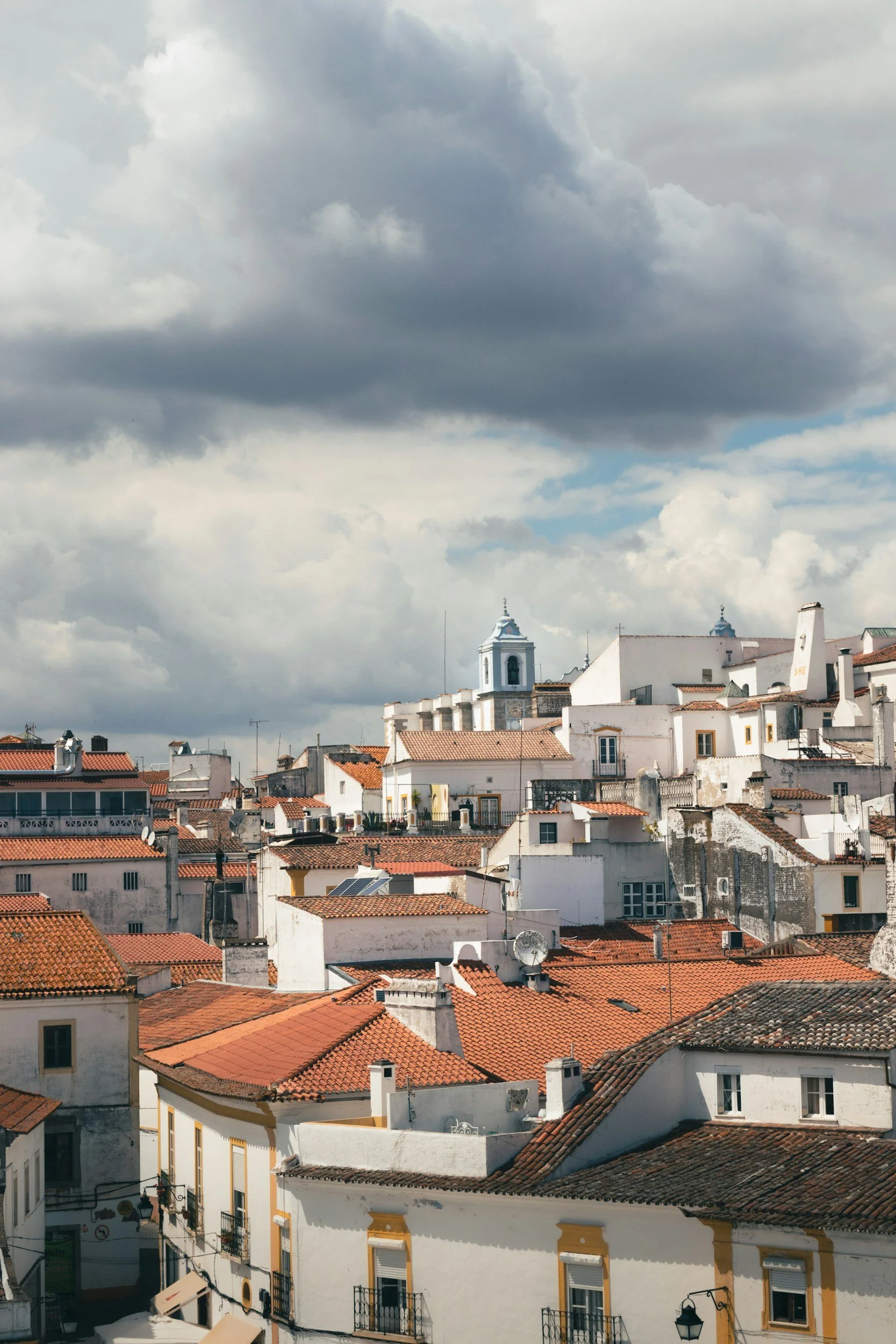
World heritage, living history, and ancient landscapes
Just 25 minutes from Gandum Village, Évora is one of Portugal's richest cities in terms of historical, archaeological, and cultural heritage. Classified as a UNESCO World Heritage Site, it is a place where different layers of history—Roman, medieval, Manueline, and contemporary—coexist in a surprisingly vivid way. It is an essential outing for anyone staying at Gandum who wants to better understand the Alentejo.
Roman Temple of Évora
Also known as the Temple of Diana, it is one of the most important Roman ruins in Portugal. Built in the 1st century AD in honor of Emperor Augustus, it is located in the heart of the historic center.
Its grandeur and state of preservation make it one of the city's most emblematic monuments and a must-see for anyone interested in ancient history and Roman architecture.
Free admission · Free access
Évora Cathedral
The Cathedral of Évora is the largest medieval cathedral in Portugal and one of the city's most striking buildings. It combines Romanesque and Gothic elements and houses a valuable Museum of Sacred Art, with pieces of great historical importance, such as the 13th-century Virgin and Cardinal D. Henrique's crosier.
Climbing up to the terrace is highly recommended: the view over the rooftops of Évora and the Alentejo plains is one of the most beautiful in the region.
Hours:
Open year-round · 9:00 a.m.–5:00 p.m.
Last entry at 4:30 p.m.
Chapel of Bones
Located next to the Church of São Francisco, the Chapel of Bones is one of the most unique and symbolic places in Évora. Built in the 17th century, it is lined with the bones of around 5,000 people and conveys a clear message about the fragility of human life.
More than just a macabre place, it is a space for deep reflection, marked by frescoes on the ceiling and an altar dedicated to the suffering of Christ.
Timetable:
March to October: 9:00 a.m.–6:30 p.m. (last admission at 6:00 p.m.)
November to February: 9:00 a.m.–5:00 p.m. (last admission at 4:30 p.m.)
Closed: January 1, Easter Sunday, December 24 (afternoon), and December 25
Church of Saint Francis (Évora)
One of the most notable examples of Gothic and Manueline architecture in Portugal. Built between the 15th and 16th centuries, it stands out for its monumental scale, decorative richness, and historical importance in the religious and cultural context of the city.
It is located in the historic center of Évora, also classified as a UNESCO World Heritage Site.
Almendres Stone Circle and Menhir
A few kilometers from Évora are two of the most important megalithic monuments in the Iberian Peninsula.
The Almendres Cromlech, consisting of 95 stones arranged in an elliptical shape, and the Almendres Menhir, approximately 3.5 meters high, date back to the Neolithic period and are aligned with the sunrise on the summer solstice, suggesting a strong astronomical and ritual significance.
Both are classified as Properties of Public Interest and National Monuments, and visiting them offers a direct link to a past that predates written history.
Évora: a natural extension of your stay at Gandum
Visiting Évora complements the Gandum Village experience. While Montemor-o-Novo offers time, space, and tranquility, Évora adds historical depth, monumental heritage, and a broader understanding of Alentejo identity.
It's an ideal half-day or full-day outing—and returning to Gandum in the late afternoon always tastes better.